I don't want to start this blog with some boring function analysis. Because the whole script is decompiled from .lua bytecode, it's hard to figure out those meaningless names. So I want to start with some real cases, whether they are interesting or annoying. And we will study the code and AI logic by analyze these cases with questions.
Insidious Backstep Spinning and Water Splash
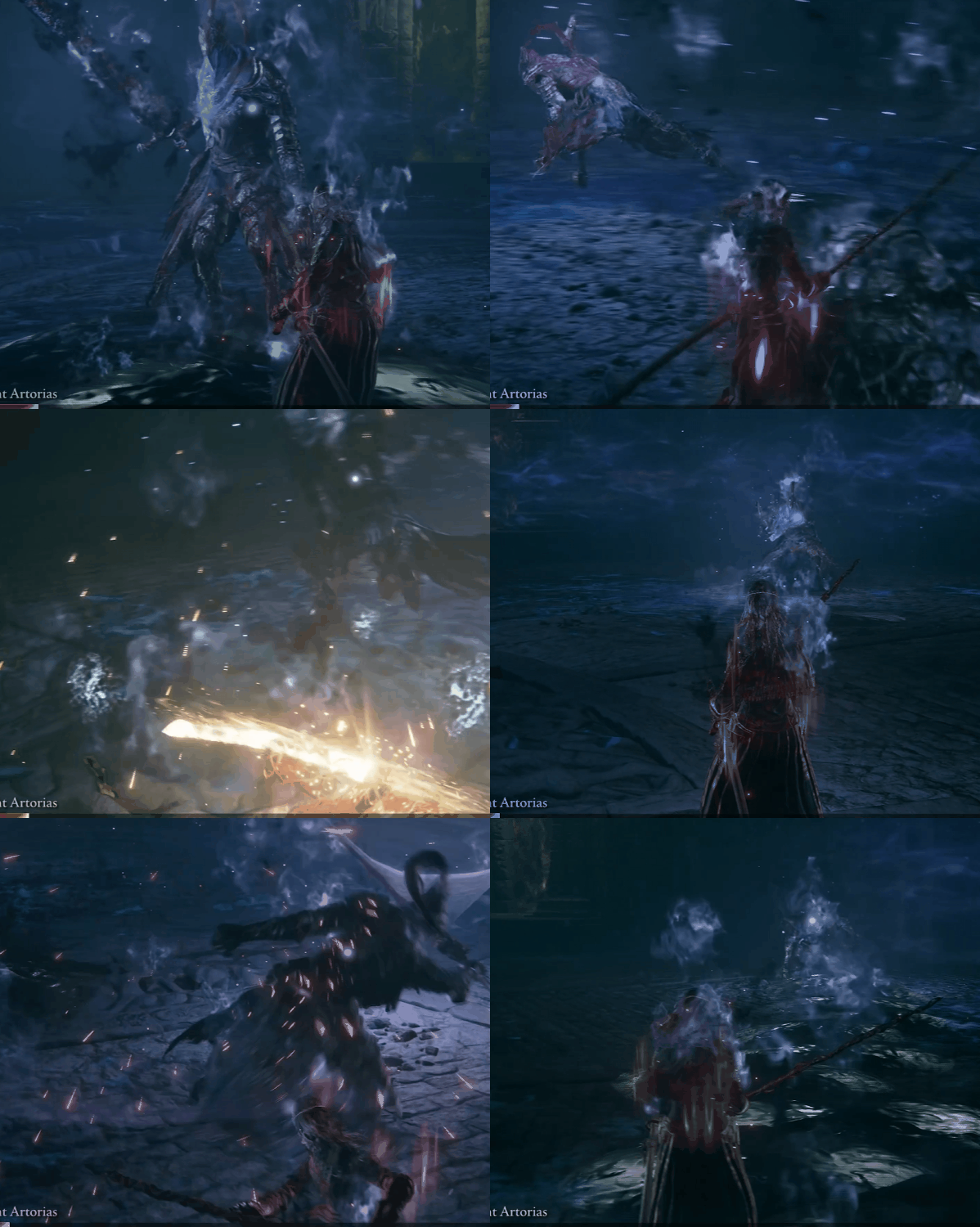
If you've fought this boss many times, you must be quite familiar with this attack:
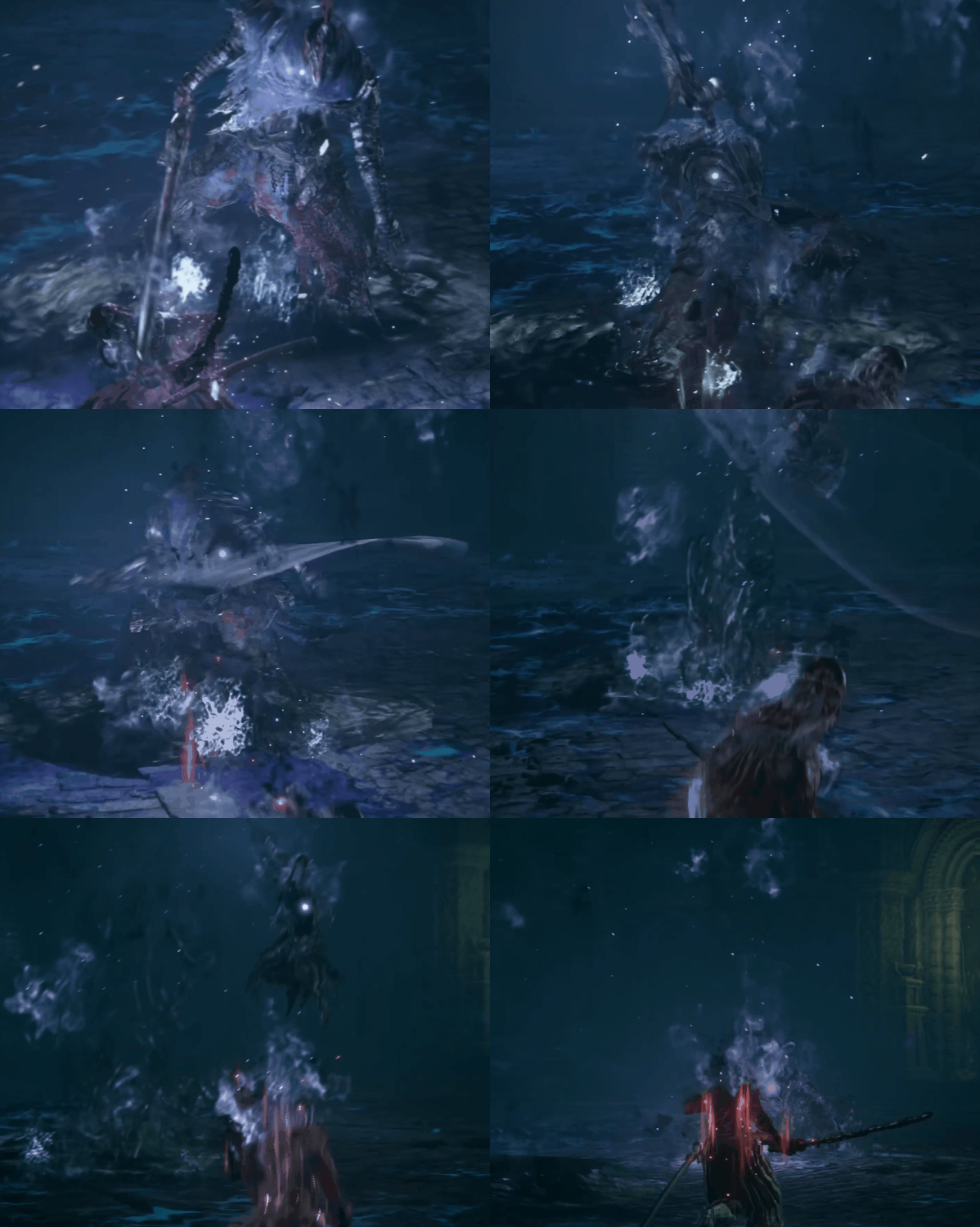
Very cool, but very dangerous. This attack only appears when target player is close to the boss with specific angle. Water splash is similar to this one.
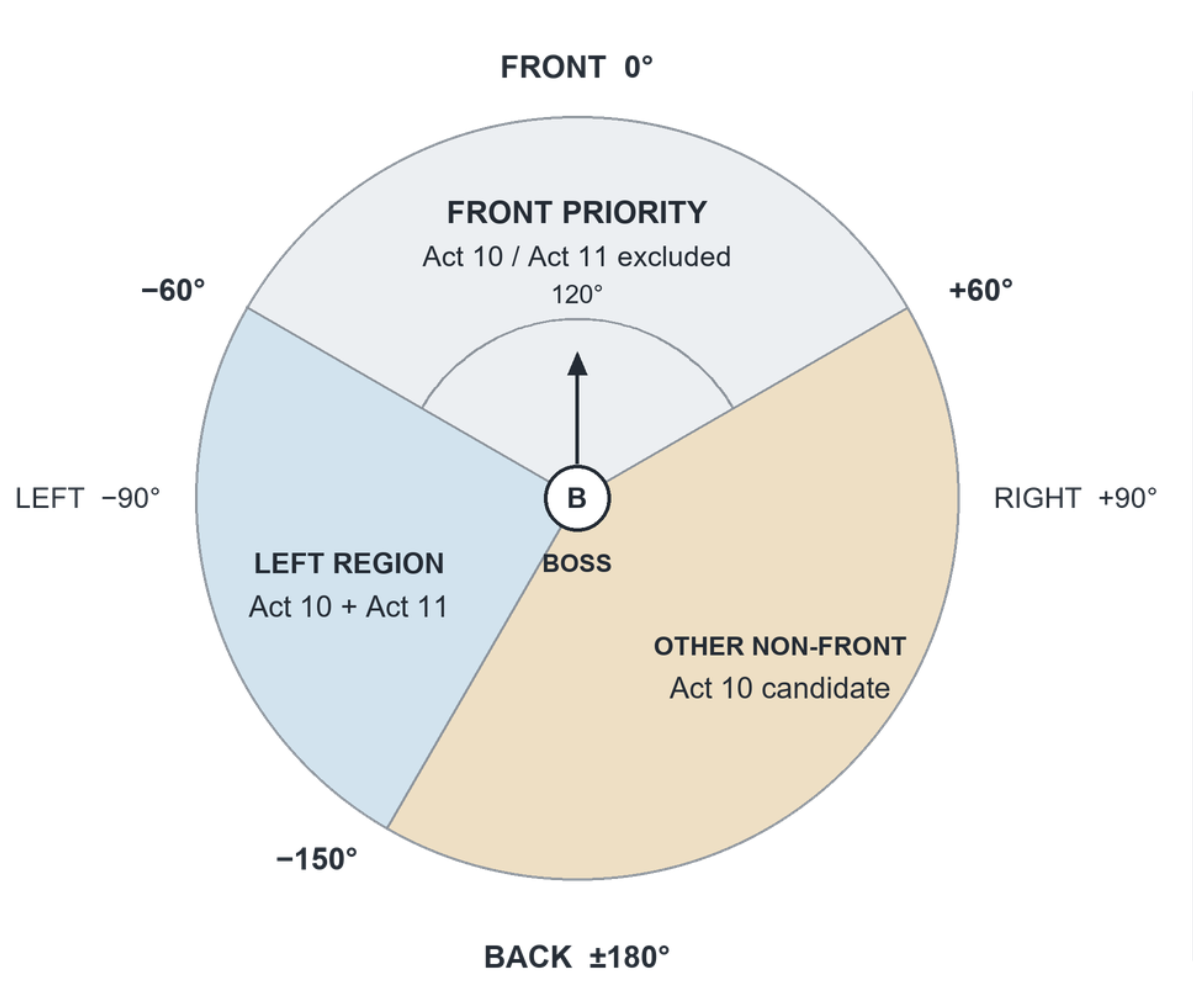
Act10 is backstep spinning and Act11 is water splash. They use the same set of close-range judgements, in the following order:
-- Excluding other branches
if d > 3 then
    -- use other Act
elseif Target within 120° ahead then
    -- Standard melee attack pool
elseif Target within 120° to the left then
    -- Allow Act10 and Act11
else
    -- Only allow Act10
end
Roaring and Long Combo Attack
Roaring is Act07 with animation ID 3006. Boss can roar in both phase 1 and phase 2, but he won't do that long combo attack in phase 1. So what controls that?
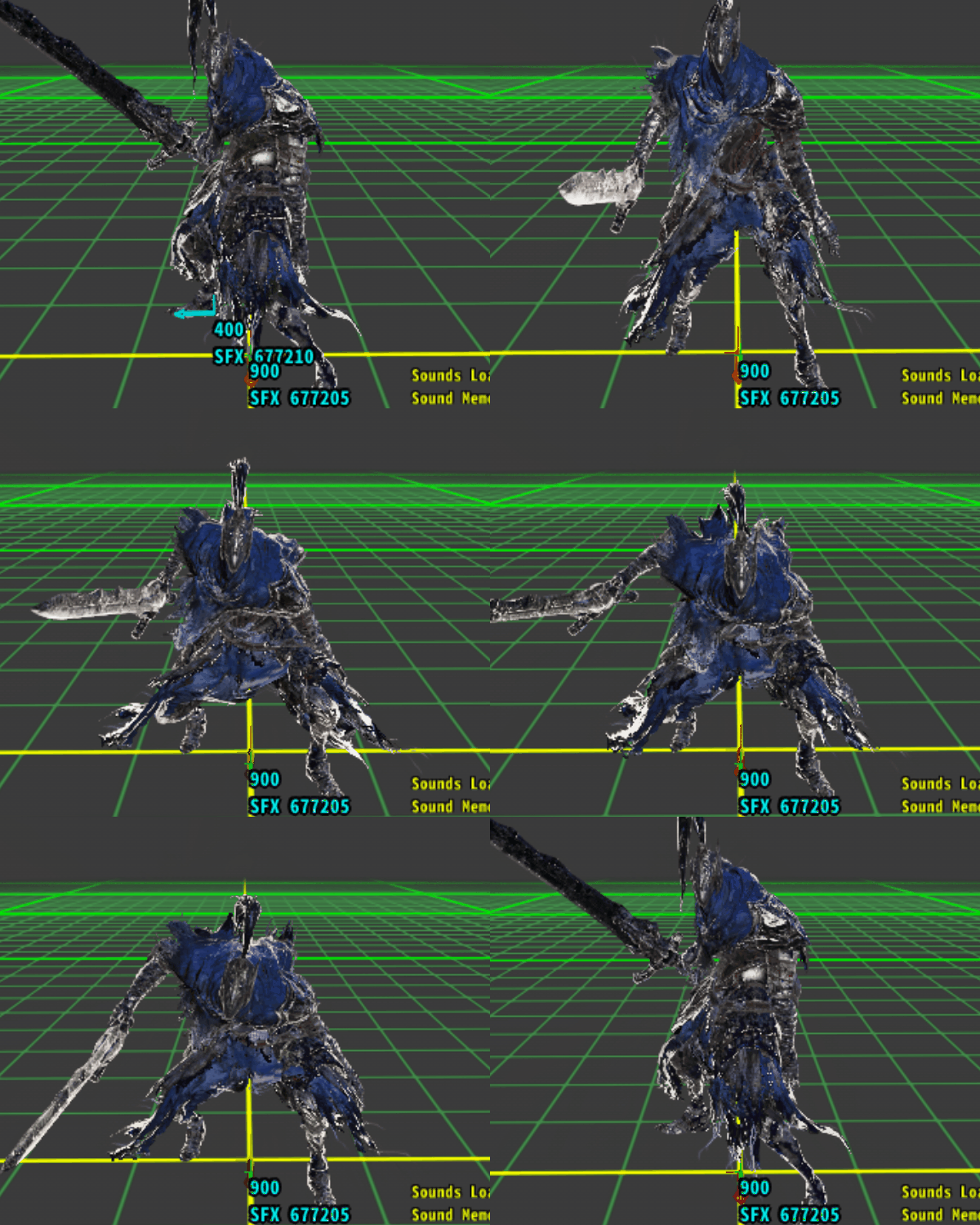
Let's look in Act07 code:
function Artorius772000_Act07(f9_arg0, f9_arg1, f9_arg2)
    -- Some local variables
    f9_arg0:AddObserveSpecialEffectAttribute(TARGET_SELF, 5025)
    f9_arg0:AddObserveSpecialEffectAttribute(TARGET_SELF, 5026)
    f9_arg0:AddObserveSpecialEffectAttribute(TARGET_SELF, 5027)
    if f9_arg0:HasSpecialEffectId(TARGET_SELF, 5401) == true then
        f9_arg1:AddSubGoal(GOAL_COMMON_ComboTunable_SuccessAngle180, 15, f9_local8, TARGET_ENE_0, 999, f9_local10, f9_local11, 0, 0)
        GetWellSpace_Odds = 0
    else
        f9_arg1:AddSubGoal(GOAL_COMMON_ComboTunable_SuccessAngle180, 15, f9_local8, TARGET_ENE_0, f9_local9, f9_local10, f9_local11, 0, 0)
        GetWellSpace_Odds = 0
    end
    return GetWellSpace_Odds
end
Notice that this act first registers three monitors to SpEffect 5025, 5026 and 5027. In phase 1, roaring [a000_003006] won't add SpEffect 5025, which will be added in phase 2 roaring [a001_003006]
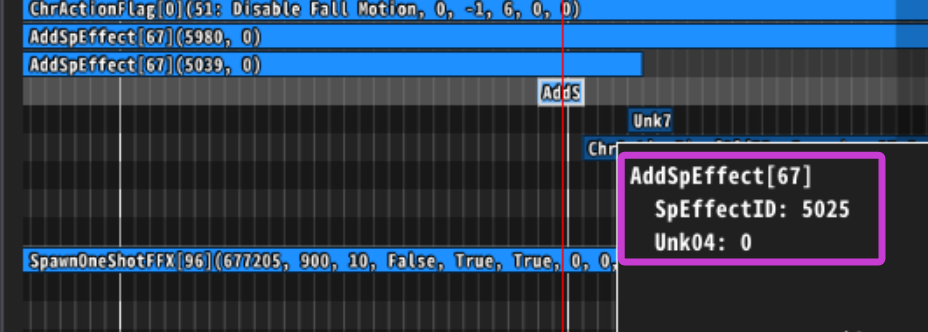
After adding SpEffect 5025, it might be handled in function Goal.Interrupt:
Goal.Interrupt = function (f27_arg0, f27_arg1, f27_arg2)
    -- some other interrupt
	if f27_arg1:IsInterupt(INTERUPT_ActivateSpecialEffect)
        and f27_arg1:GetSpecialEffectActivateInterruptId(5025)
        and f27_arg1:IsInsideTargetCustom(
            TARGET_SELF, TARGET_ENE_0,
            AI_DIR_TYPE_F, 360, 180, 40
        )
    then
        f27_arg2:AddSubGoal(
            GOAL_COMMON_ComboRepeat_SuccessAngle180,
            15, 3030, TARGET_ENE_0, 999, f27_local5, f27_local6, 0, 0
        )
        return true
    end
end
It first detects if currently happens INTERUPT_ActivateSpecialEffect and see if it's SpEffect 5025. And it also uses IsInsideTargetCustom to see if there is enough space for the subsequent attack.
After all those detections, it registers 3030, which is the first attack of that long combo attack.
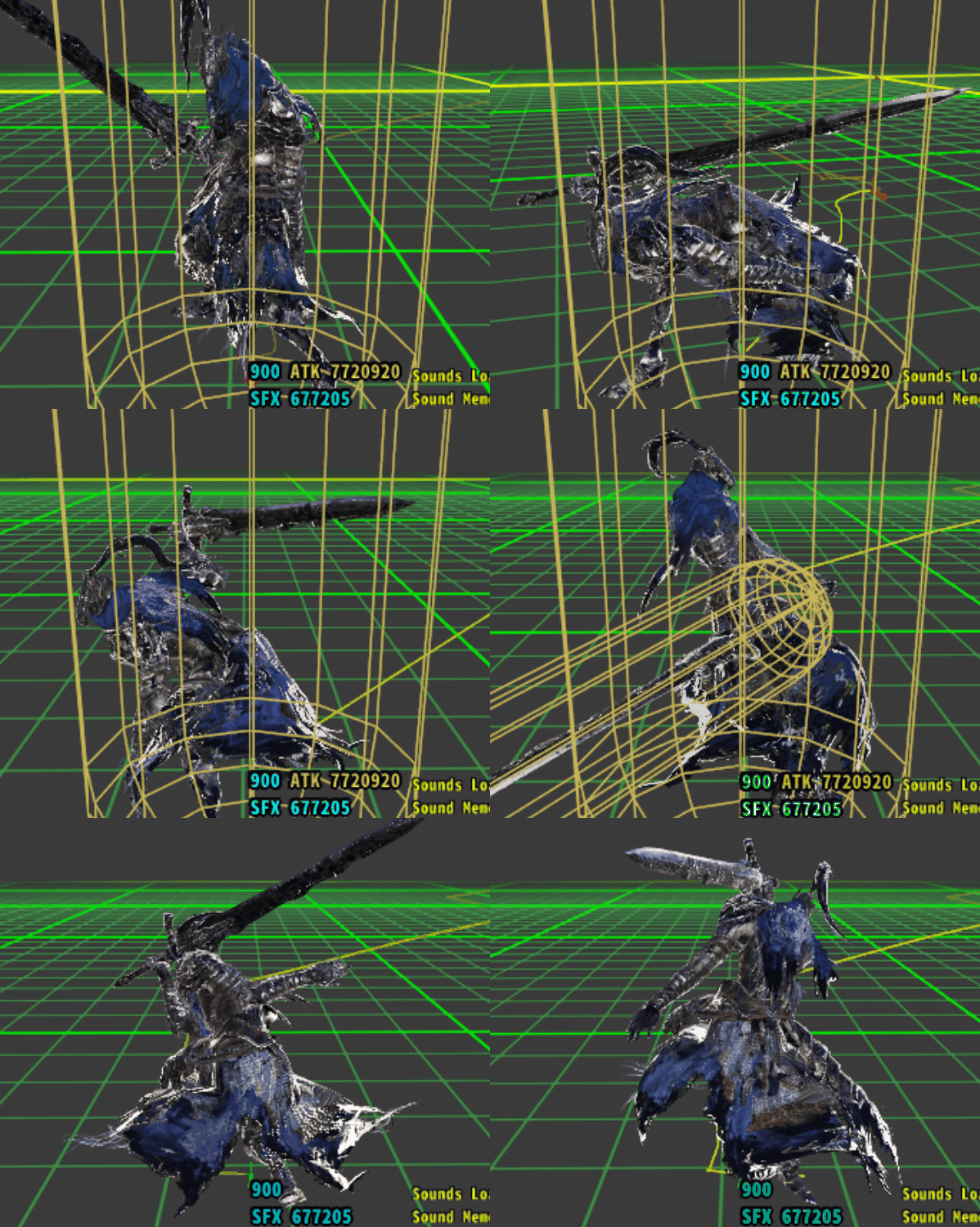
And this animation will add SpEffect 5026, which controls for the subsequent attacks.
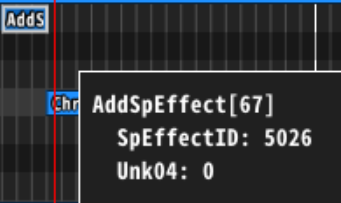
Actually this long combo attack only has three attack animation. So we have three SpEffects for each of them.
Roaring Does Not Guarantee Long Combo Attack
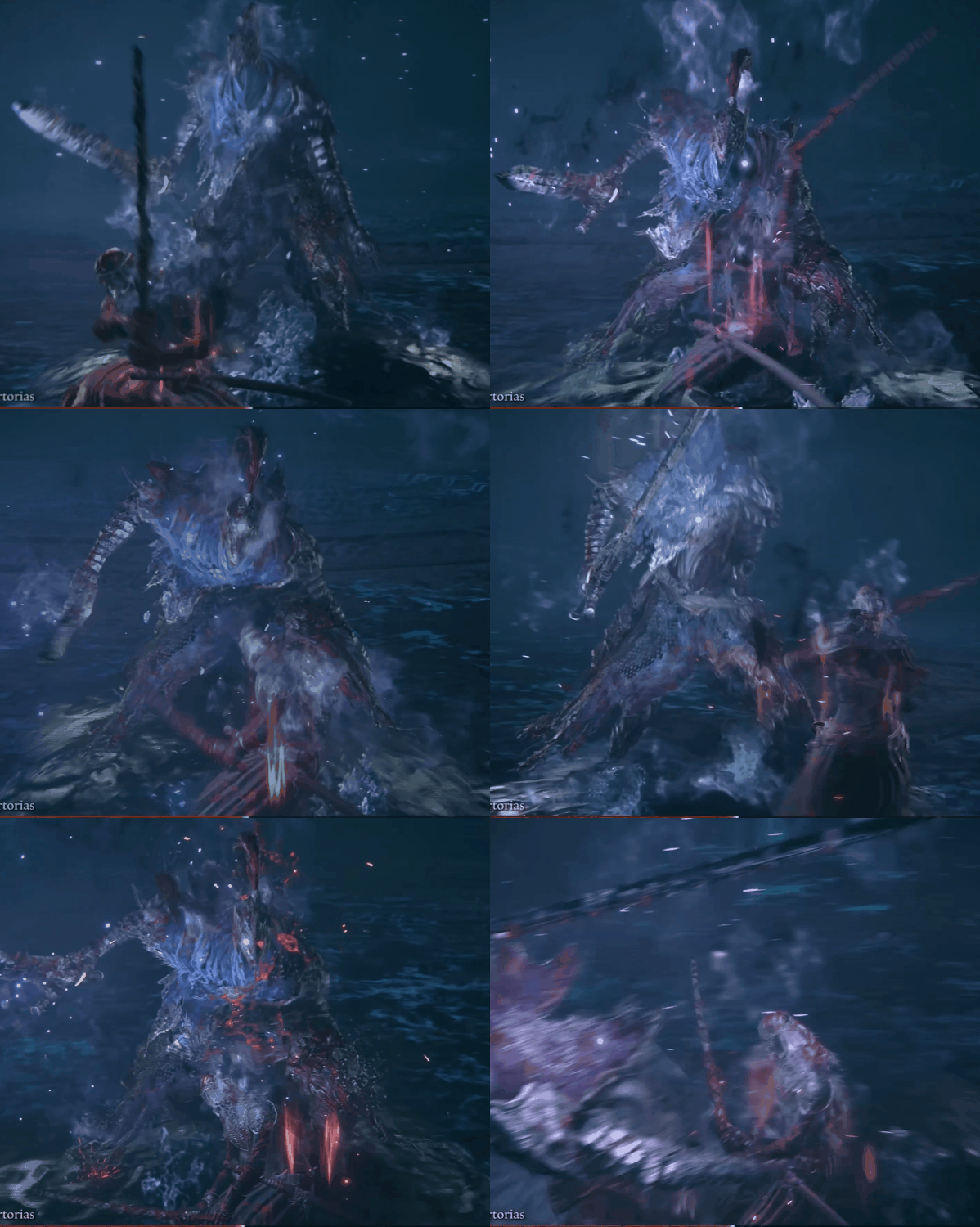
Some times you may notice that boss won't directly start long combo attack after roaring (phase 2). For example, the following gif shows a situation that boss roars twice then starts a long combo attack.
Actually, Act07 is not the only function that can schedule roaring 3006. Roaring can also be arranged in AdjustSpace function. For example, when distance between boss and target player is 3-4 and the random number is greater than 90, it will add 3006 to the subGoal.
function Artorius772000_ActAfter_AdjustSpace(f24_arg0, f24_arg1, f24_arg2)
    local f24_local0 = f24_arg0:GetDist(TARGET_ENE_0)
    local f24_local1 = f24_arg0:GetRandam_Int(1, 100)
    if f24_local0 < 2 then
        -- Many conditional branches
    elseif f24_local0 < 5 then
        if f24_local1 <= 65 then
		-- Many conditional branches
        else
            f24_arg1:AddSubGoal(GOAL_COMMON_ComboTunable_SuccessAngle180, 15, 3006, TARGET_ENE_0, Dist_None, 0, 0, 0, 0)
        end
        -- Many conditional branches
end
AdjustSpace function
There are a lot more to say about this function. It not only can add roaring into the queue, most of time it controls distance adjustment and dodge.
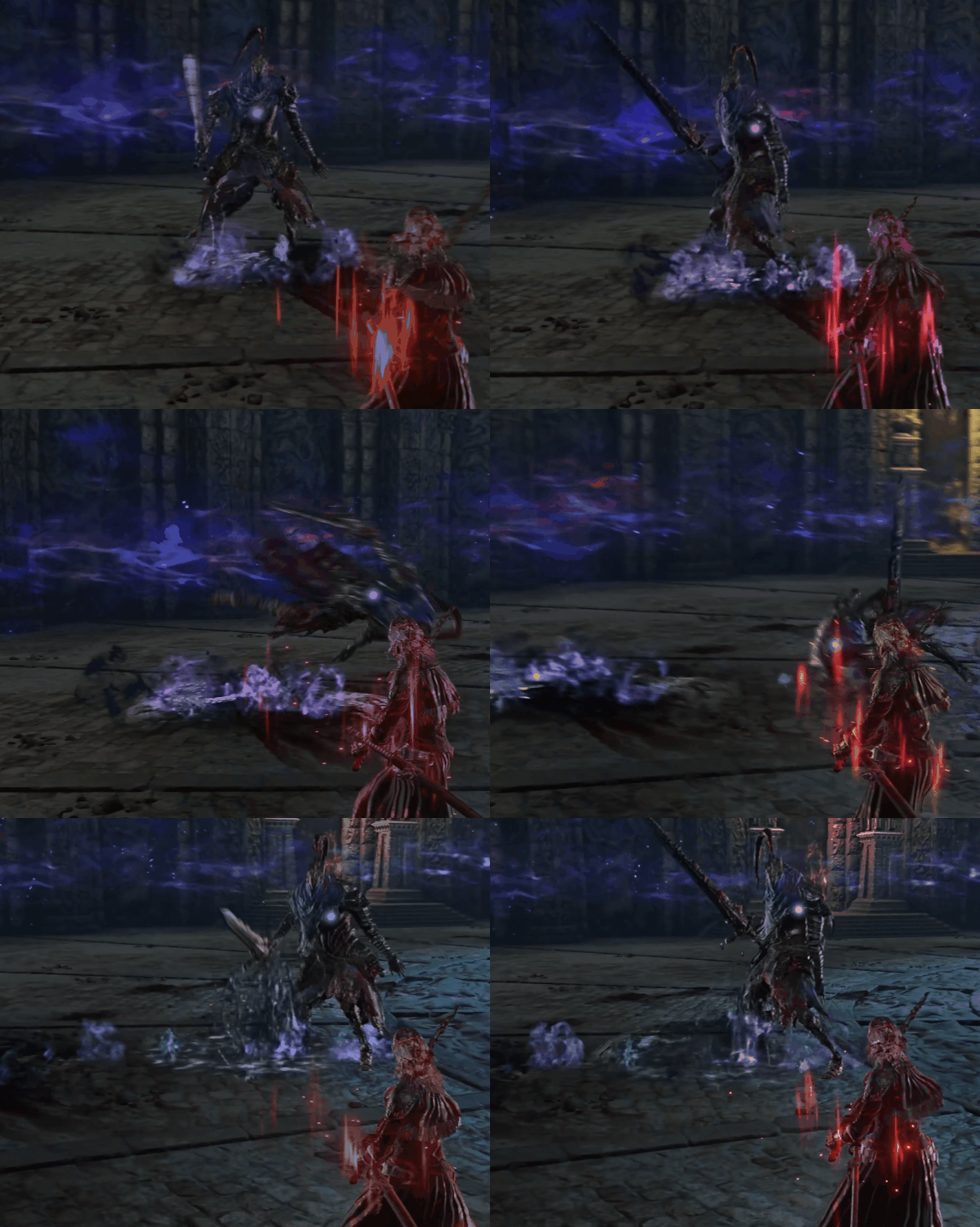
After entering the function, it first get distance d and draw a random integer from 1 to 100:
Distance d | Dodge | Sideway Move | Leave Target | Roaring 3006 |
|---|---|---|---|---|
d < 2 | 75% | -- | 25%, target d 4 | -- |
2 <= d < 5 | 65% | -- | 25%, target d 8 | 10% |
5 <= d < 10 | 25% | 45% | 10%, target d 12 | 20% |
d >= 10 | -- | 80% | -- | 20% |
- Dodge: Dodge away from the direction in which the target is located -- front, back, right, or otherwise; actual execution is also influenced by StepSatey's path checking.
- Sideway Move: Randomly choose left or right, lasting 2-2.5 seconds.
- Leave Target: Request to leave the target, with a sub-target lifetime of 2.5 seconds.
- Roaring: Directly arrange
3006, no need to go through Act07.
Now we have another question: When will this AdjustSpace function be executed? There are two ways: one is Goal.Activate function, the other is Goal.Interrupt function.
Goal.Activate is a function to control which Act0x can be executed, it also controls AdjustSpace function. After tons of conditional branches, each Act0x will have a probability and the probabilities are stored in f2_local1 list. f2_local9 is registered AdjustSpace function. Both of them will be passed to Common_Battle_Activate as parameter.
Goal.Activate = function (f2_arg0, f2_arg1, f2_arg2)
    -- Tons of branches here
   	f2_local1[45] = REGIST_FUNC(f2_arg1, f2_arg2, Artorius772000_Act45)
    local f2_local9 = REGIST_FUNC(f2_arg1, f2_arg2, Artorius772000_ActAfter_AdjustSpace)
    Common_Battle_Activate(f2_arg1, f2_arg2, f2_local0, f2_local1, f2_local9, f2_local2)
end
All Act0x functions return a random number GetWellSpace_Odds. In the common attack function, after it selects attack and arranges it, it executes AdjustSpace directly and add subsequent movement in the queue. GetWellSpace_Odds controls the probability of executing AdjustSpace. The distribution is as follows: (SpEffect 60751 can be simply considered as phase 2, actually I'm not quite sure about it. We will talk about it later)
| Act | SpEffect 60751 = false | SpEffect 60751 = true |
|---|---|---|
| 1, 2, 6, 11, 13 | 70% | 50% |
| 3, 4 | 70% | 0% |
| 5 | 100% | 0% |
| 9, 10 | 80% | 50% |
| 7, 12, 20, 21, 40-45 | 0% | 0% |
| 8 | Changed within the branches | Changed within the branches |
For Goal.Interrupt, AdjustSpace will be executed in some specific SpEffect. For example, in Act07, Goal.Interrupt checks SpEffect 5027 to arrange the final attack. After adding the attack, it executes AdjustSpace. Goal.Interrupt will execute AdjustSpace in SpEffect 5027, 5028, 5029 and 5030.
Successive Long Combo Attack
I once encountered a situation where the boss used long combo attack 3 times successively. Logically speaking, attacks like this should have cooling time. So what results in that?
Normal long combo attack with cooling time works like this (we will talk about 3016 later, it's about aura burst):
3016add SpEffect60781, open the entrance of long combo attack → Act07 roaring → SpEffect5025→ First attack3030in combo attack →3030add SpEffect60780→60780lasts 40s → After lifespan ends,60781is generated and the entrance reopens
So when will the boss do successive attack? Remember AdjustSpace function we discussed before? After the end of long combo attack, it may directly execute AdjustSpace and if luckily it also executes roaring 3006, the second long combo attack may appears.
-
Act07 registers monitors to SpEffect
5025-5027 → roaring
3006 → SpEffect5025triggers first attack3030 → SpEffect5026triggers second attack3031 → SpEffect5027triggers final attack3032 ↓ Directly executeAdjustSpace ↓ Roaring3006 If the monitors are still alive ↓ SpEffect5025triggers first attack3030 ...
In general, the reason why successive long combo attack happens is that the monitors are not cleared. So if the AdjustSpace triggers roaring, the remaining monitors will keep triggering attack. This path does not need a cooling time.
Aura Burst
There are two types of aura burst, one is changing phase 1 to 2 3016, the other one is used within phase 2 3013. The cooling time is 80s
The first aura burst will also prepare the entrance of long combo attack: Act21→3016→SpEffect 60781. It will also add SpEffect 60751, which changes the weight in AdjustSpace.
Tools used to unpack the game
- UXM-Selective-Unpack: Unpack original
.bdtdata file into a huge number of.dcxresource bundles (actually there will be other file formats but we only focus on files \script, which are.dcx). - WitchyBND: Unpack the resource bundles you want. You will get a
.luafile. But we need another tool to decompile it since it's bytecode. - DSLuaDecompiler: Decompiler for Dark Souls/Bloodborne/Sekiro AI lua files and Havok behavior scripts.
After complete all of these steps, you will get a readable(?) .lua script.
Also, we need DSAnimStudio to view the animations directly.